Free PDF Paying for the Party: How College Maintains Inequality
However, even this publication is produced based upon the truth, one that is extremely fascinating is that the author is extremely clever to earn this book very easy to check out and understand. Valuing the excellent visitors to always have checking out behavior, every author serves their best in providing their ideas and also jobs. Who you are and also exactly what you are does not end up being any kind of big trouble to get this book. After visiting this website, you could check even more about this publication and afterwards discover it to recognize reading.
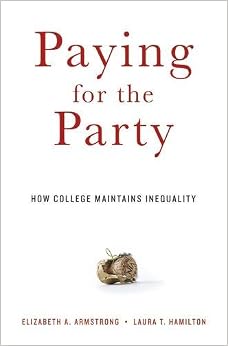
Paying for the Party: How College Maintains Inequality

Free PDF Paying for the Party: How College Maintains Inequality
Story of the leisure activity and life of every person will certainly be distinct. The experience, adventure, knowledge, and also life has actually be done end up being the aspects of the condition. Nevertheless, age doesn't come to be the reason of exactly how a person comes to be smarter. To be a clever person, numerous ways can be done. Understanding diligently, discovering by doing as well as practising, getting experience and understanding from other individuals, as well as obtaining resources from guide end up being the methods of being smarter.
This is one of your favourite books, right? That's true. If this is one of them, you can start by reviewing page by web page for this publication. The reasons could not be so difficult. We provide you a great book that will certainly not only influence you yet also show you the true life. When getting this publication to check out, it will be so various when you check out others. This is a new coming book that makes this world so shacked. For your life, you can obtain several options and advantages create this Paying For The Party: How College Maintains Inequality
There is absolutely nothing to doubt t get this publication as one of the knowing procedure to improve the understanding and also perception. When you could appreciate of the author as well as the book, you could feel happy to check out guide. As a publication, Paying For The Party: How College Maintains Inequality does not just become the analysis material. It can be the friend to be always there with you. When you have nothing to do, this book can be a wonderful different to make your time worthier.
For this reason, you could take Paying For The Party: How College Maintains Inequality as one of your analysis products today. Even you still have the various other publication; you could create your determination to really get this significant publication. It will always provide benefits from some sides. Reading this type of book additionally will direct you to have even more experiences that have not.
Review
“Instead of being a great equalizer, Paying for the Party argues, the American way of college rewards those who come not just academically but socially prepared, while treating working-class students more cruelly, and often leaving them adrift.â€â€•Ross Douthat, New York Times“A striking new book… Although full of the comedies, rivalries and mini-dramas one might find in a high school movie or romcom, it is also a serious―and seriously depressing―study of American higher education.â€â€•Matthew Reisz, Times Higher Education“Beautifully written, knitting together themes of social class, gender, sexuality, organizations, and education, the book is destined to be a classic…Its authors have cemented their status as experts on higher education.â€â€•Amy J. Binder, Chronicle of Higher Education“Paying for the Party is well written and perversely hard to put down. Readers who did their own share of partying in college may cringe in rueful recognition.â€â€•Mary Taylor Huber, Change“Focusing on the pathways leading to the college experience, the authors reveal an honest, if at times unflattering, look at the reality of the academic experience for women of both high and low socioeconomic status. Packed in with the data derived from the authors’ interviews is an intimate portrait of the study’s participants combined with researcher commentary that clarifies what the data represent: an unsettling picture of universities failing to lessen the disadvantages facing many of their students… This work will provide spectacular insights into gender and schooling and serve as a useful example of how to report ethnographic research.â€â€•Rachel Wadham, Library Journal (starred review)“In typical frat parties, Armstrong and Hamilton see much that is wrong with college education today. Such parties allow daughters of the affluent to flaunt their social advantages while exposing the vulnerabilities of female students from less-privileged backgrounds. Unfortunately, the authors find such parties well established in the ‘party pathway’ through the university. Focusing on female students, the authors find from campus observations and interviews ample evidence that four years on the party pathway will open doors of power for the elite while stranding the wannabes with mountains of student-loan debt and few employment options for paying off that debt… A provocative exposé of socially polarizing trends in higher education―certain to spark debate.â€â€•Bryce Christensen, Booklist“Armstrong and Hamilton report the results of their fiveâ€year study of a group of young women who began in the same freshman dorm but ended up in very different situations. The constraints of social and economic class remained formidable, and moving into the professional class seemed virtually impossible, especially for those women who followed what the authors call ‘the party pathway.’ Women from more privileged backgrounds survived their partying through school due to their more substantial support systems at home. We also see how difficult the college adjustment was for less talented students and for women from modest backgrounds and small towns… The conclusions are sobering, if not depressing. Armstrong and Hamilton assail the university itself for a number of failures, including an ineffectual system of student advising; a plethora of meaningless majors and courses designed to attract fullâ€paying students, many of whom have no intention of actually pursuing such a career; and its continuing support for the fraternity/sorority system, which the authors contend undermines the very academic mission of the university. Athletics take some major blame, as well. The authors also discovered that some of the women who transferred to regional campuses performed better and were happier.â€â€•Kirkus Reviews“Armstrong and Hamilton pepper the book with student interviews, and ultimately suggest substantial changes to university structure for creating an egalitarian, merit-based environment. The extensive research and approachable writing style make this book useful to any audience interested in learning more about social differences within the education system.â€â€•Publishers Weekly“With astute observations and insights, Paying for the Party sheds new light on the lived experiences of contemporary students. It is a very important piece of scholarship that will inform the national discourse on the current state of U.S. higher education.â€â€•Richard Arum, author of Academically Adrift“By focusing on the lives of young women who spent freshman year living on a ‘party floor,’ Armstrong and Hamilton help us understand critical issues facing American higher education, including the out-sized role of sororities and fraternities and how the values of affluent students coincide with the interests of universities to empower the ‘party pathway.’ Richly observed and vividly narrated, this is an important ethnography of American campus life.â€â€•Steven Brint, University of California, Riverside
Read more
About the Author
Elizabeth A. Armstrong is Professor of Sociology and Organizational Studies at the University of Michigan.
Read more
Product details
Paperback: 344 pages
Publisher: Harvard University Press; Reissue edition (October 12, 2015)
Language: English
ISBN-10: 9780674088023
ISBN-13: 978-0674088023
ASIN: 0674088026
Product Dimensions:
6.1 x 1.1 x 9.4 inches
Shipping Weight: 13.6 ounces (View shipping rates and policies)
Average Customer Review:
4.3 out of 5 stars
37 customer reviews
Amazon Best Sellers Rank:
#26,686 in Books (See Top 100 in Books)
This is quite a book. Its thesis is that the kids who go to college to take “easy†majors and to party a good deal, they are the ones who keep the college gates open. They are the majority of the students. They are the ones who, primarily, pay for the place. Among the rest, are the very serious students, the ones who come in with high grades and ambitions, then continue on that track and go straight in to their planned profession. Another group is those who want “mobility†from college, the use of their college degree to better themselves.The three college “pathways†defined in the book are professional, party and mobility.Those on the “professional†pathway are the high achievers, who, generally, come from professional families, the doctors, lawyers, engineers, etc. They have excellent financial support in college, so they are not expected to work while there. They have the most contacts for meaningful internships, as well. Most in this pathway are successful in meeting their college goals, due, in a large part, because they are very well-prepared and counseled before and during their college experience. College is not a big deal to them. It is an essential step in their quest for professional success.Those on the “mobility†pathway have lower-middle or working-class backgrounds. They are motivated to find careers that will take them places, for example not back to their home towns. Not all will succeed. They lack preparation for the college experience and financial backing. Most need to work during college. Few are able to reach the professional pathway and go on to graduate school.Then there is the “party†pathway. These kids are all over the place. Many are from out of state; thus, they pay higher tuition and other costs. They tend to take “easy†majors, join fraternities or sororities and strive to finish with a degree that probably does not lead directly to a job. Some have vocations already defined for them back home, e.g., to work in a family business. Others think that being good at interacting with others will lead them to opportunities that do not required “hard†degrees. Many of the women are there to learn, primarily, how to be a “good wife.†Many are there primarily to perfect the socialite life.This book is based on a five-year interview study, plus follow-ups, of about 50 women students at a mid-west college that the authors name “MU.†Multiple times, the book points out the distinction between this level of college or university and the state college universities. It is clear that “MU†is a prestigious school in many ways and that it is at a much higher status level than the state college universities. It is relatively hard to get into MU, and not everyone is going to make it at MU.Clearly, funding from parents is a major component for success at MU, as is the educational level of parents. If your parents have gone to college, then they know the ropes. If not, you are, for the most part, on your own. Some of the kids enter MU with a great deal of knowledge about the school, itself; for others, it is like entering “another world,†something they have never experienced.The flow of the book is bit ragged. There are comparisons between girls. There are individual studies of a single girl. There are groups examined, together. Yes, while it is true that there are many variables to discuss and compare, it would still seem that the book could have been organized better.At the same time, the stories and information presented keeps one interested and makes for a very good book, I think.There is plenty of bad news. For example, about 60% of those on the professional pathway do not make it, per one section of the book, and despite what I said above. They are not headed by the time of graduation to graduate school in their chosen profession. The competition in this professional pathway is fierce. It is the survival of the fittest, and the financial and other parental support can mean all the difference.Most on the party pathway did not see themselves on the way to graduate school or a profession, such as medicine or engineering. Their dilemma is that their degree is not going to get them a good job, for the most part. It does not give them skills that lead directly to a good job. Many find jobs after graduation that do not even require a college degree. One, for example, with a degree in Biology, ends up working as a dental assistant for $11 per hour.One of the girls develops a serious problem with alcohol. She has to drop out and go into rehab.Many in the party or mobility pathway lack funds after graduation to live in areas with good jobs. In short, all that partying experience is not going to pay the bills after graduation. And, if you have student debt to pay after graduation, that is another problem. None of the girls from a working-class background, most who had to work to pay their bills, were able to graduate in four years.Joining a sorority tends to keep students on the party pathway; although, one or two sororities seek high-achievers on the professional pathway. Most do not. But then there are the ones who do not get selected by sororities at all. They can lead lonely, isolated lives in comparison with those selected, as those selected tend to only associate with others in sororities.As graduates, those with degrees in business seemed to have the smoothest path directly into a good job.The author makes a bit of a case that the college/university structure needs changes. One suggestion is that fraternities and sororities be banned, but few schools are willing to do that. Another is that the schools provide more support to those seeking mobility.The shocker remains that, per this book, most who go to college go, primarily, to socialize and party. And, without that group, most colleges would probably have to close their doors.That would end a lot of fun for a lot of college students, many of whom are simply in their extended adolescent stage..
While I had a little trouble keeping of the various women on the floor on my Kindle version, I found this be an enjoyable, easy, and thought-provoking read. I'm not a social scientist so can't comment on whether the methodology and sample size "confirm" the findings, but there is no doubt that the authors have captured some important truths in their study, and they should be noted by students, parents, and administrators. Particularly at a school such as the one highlighted here which attracts students with varying resources and objectives -- but really at any -- several of the "pathways" may be highly seductive yet inappropriate for a portion of the student body. When colleges (public or private) report on "outcomes", they don't put an asterisk next to the ones that required the graduate's family to support him/her financially and/or to use the family's network to create that outcome. (The fact that 95% of the class is employed or in grad school 6 months after graduation may say more about the demographics of the student body than the value of the degree or effectiveness of the Career Placement office.) Good advising, academic and social, is critical to success and needs to be calibrated to the student's circumstances.I would recommend this book for anyone looking for a framework for thinking about the academic and social options at any school and coming up with a strategy for navigating them.
Well written with enough detail and data but overall dry. This book is great for a HS senior as well as parents. Financial support and family support is the key to graduating in 4 years from a good university--they authors get it. If you do not have good financial support, go to local university and keep you spirits up and not get down over money and the pressure.
This book was very interesting. Paying for the Party gives really solid and mind opening views and research in regards to the big university experience. I would certainly recommend- it is a must read for anyone interested in sociology or college in general. However, I would say that the book is fairly repetitive.
essential reading for sociology class; an engaging read, very thorough and accessible ethnography showing how class privileges are magnified by the college experience at a large state university with an active Greek scene.
This is a review of the college 'track' system with reference to multiple case studies. Overall, it just paints yet another way of how the US education system is furthering the lack of social upward mobility.
Paying for the Party: How College Maintains Inequality PDF
Paying for the Party: How College Maintains Inequality EPub
Paying for the Party: How College Maintains Inequality Doc
Paying for the Party: How College Maintains Inequality iBooks
Paying for the Party: How College Maintains Inequality rtf
Paying for the Party: How College Maintains Inequality Mobipocket
Paying for the Party: How College Maintains Inequality Kindle
Paying for the Party: How College Maintains Inequality PDF
Paying for the Party: How College Maintains Inequality PDF
Paying for the Party: How College Maintains Inequality PDF
Paying for the Party: How College Maintains Inequality PDF